
Beans for a Long Life: Why Beans Are the #1 Longevity Food in the Blue Zones

Could beans be an ally in living a long, healthy life?
The longest-living people in the world say yes.
This past year, I became fascinated by the Blue Zones — the regions of the world where people live significantly longer, healthier, happier lives as compared to the rest of the world. At the time I first heard about the Blue Zones, I was living in New York City surrounded by a population generally feeling anxious, overly stimulated, and exhausted. I found myself deeply curious about the lifestyle factors within these five Blue Zones that supported such long, healthy lives.
As I dove deeper into this research (and I highly recommend the Netflix docuseries Live to 100: Secrets of the Blue Zones), one truth kept surfacing again and again: beans are the cornerstone of every Blue Zone diet in the world.
Yes, researchers found that beans are the world’s #1 longevity food.
What are the Blue Zones?
There are five Blue Zone regions in the world with the largest concentration of centenarians: Okinawa (Japan), Sardinia (Italy), Nicoya (Costa Rica), Ikaria (Greece), and Loma Linda (California). While each has its own culturally distinct practices that contribute to the long lives of its population, Blue Zone researchers identified nine shared lifestyle patterns across all of them:
Regular movement — Rather than reserving exercise for the gym, daily movement is woven into everyday life. The work and daily tasks of these populations keep them on their feet throughout the day (whether it’s gardening, doing chores, or walking up a big hill to get groceries).
Having a life purpose — A clear knowing of their why — having something meaningful that gets them out of bed every morning.
Low stress — Regular stress-relieving practices like meditation, gardening, prayer, and time with friends and family.
Eating in moderation — Eating only until about 80% full.
A primarily plant-based diet — Meat is consumed only occasionally, and beans are a central staple.
Moderate wine intake — Typically one to two glasses of wine per day, enjoyed with meals and in community.
Spiritual engagement — Active participation in faith-based communities or a consistent spiritual practice.
Close family ties — Time with family is prioritized, often with multiple generations living nearby or in the same home.
Supportive social circles — Strong social networks that support healthy behaviors and a sense of belonging.
As I continued into my Blue Zone research, what surprised me most wasn’t just that beans are present—but how consistently and abundantly they’re eaten. Beans in the Blue Zones aren’t a side dish—they’re the center of the meal and eaten once or twice daily.
How Beans Show Up Across Blue Zones:
Soybeans in Okinawa.
Black beans in Nicoya.
Fava and white beans in Sardinia.
Garbanzo beans and lentils in Ikaria.
Pinto beans in Loma Linda.
Beans serve as a primary source of protein, with meat consumed on average about five times per month. Blue Zone populations eat at least 1/2 cup of beans per day—roughly four times the amount of the average American.
One could argue that beans are the superfoods of these populations.
Why Beans Support Longevity
1. Beans lower chronic inflammation — the root driver of aging.
One of the major driving factors in aging and chronic disease is inflammation. Beans directly combat this by feeding the beneficial gut bacteria that reduce inflammation in the body. The antioxidants and resistant starch in beans further reduce the body’s inflammatory markers.
2. Beans protect the heart — the #1 predictor of lifespan.
Eating beans is shown to reduce LDL cholesterol and blood pressure, two of the biggest predictors of cardiovascular health and longevity.
3. Beans stabilize blood sugar — slowing metabolic aging.
The combination of fiber, protein, and complex carbohydrates in beans slows digestion, preventing the blood sugar spikes that contribute to metabolic stress and accelerated aging.
Beans are among the most balanced foods on Earth —with approximately 21% protein, they’re low in fat, rich in complex carbohydrates, and packed with fiber. This combination gives slow, steady energy throughout the day while delivering key vitamins and minerals that support overall health and vitality. Because beans are also so satisfying and nutrient-dense, they naturally displace less healthy foods in the diet.
The Longevity Way to Eat Beans
Longevity in the Blue Zone populations doesn’t come from extremes—itcomes from nourishment, slow rhythms, and consistency.
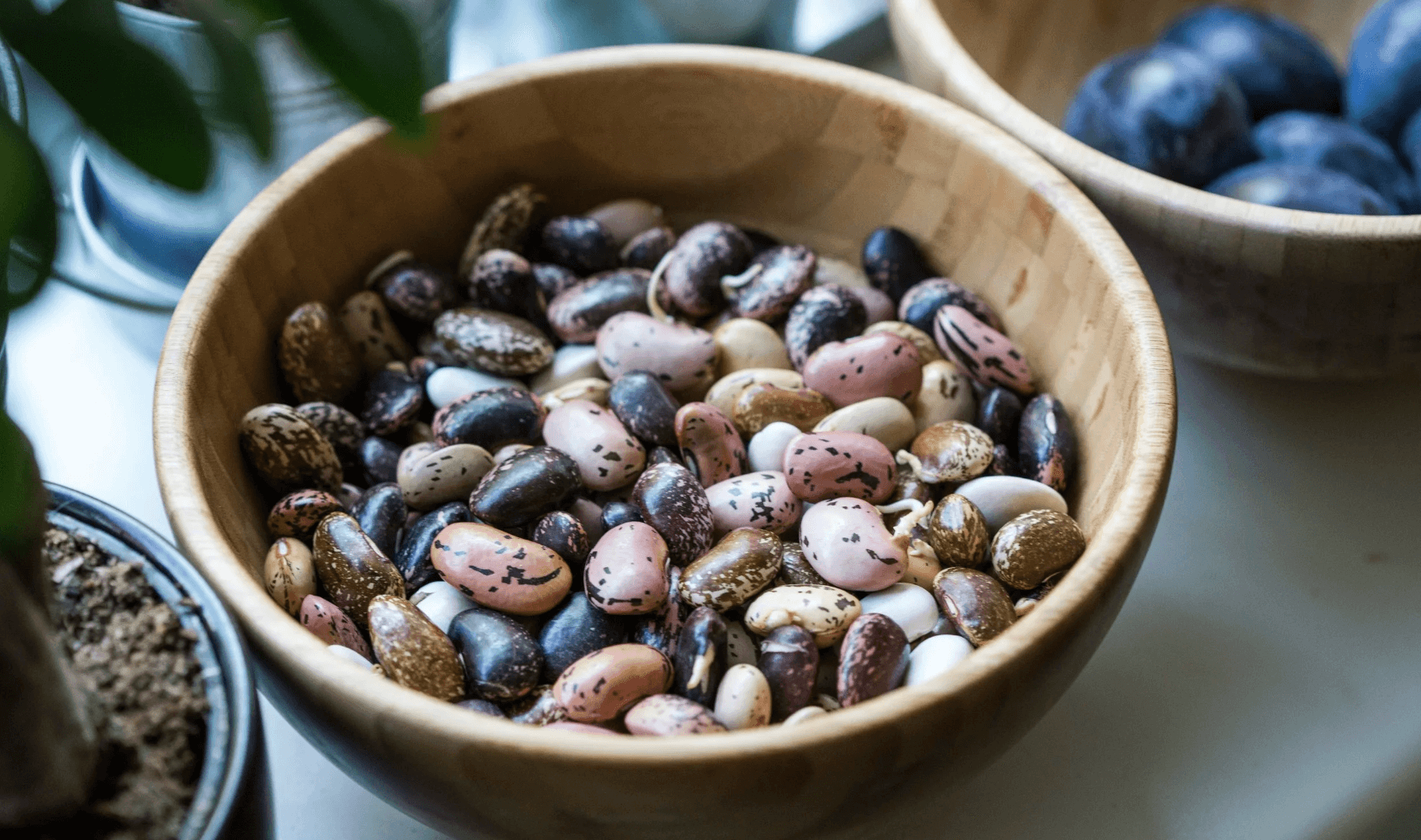
Adding beans to your diet can be as simple as adding a scoop of beans alongside your grains and vegetables. And if you’re new to eating beans or struggle with digestion, just ease in slowly and gradually. Because as you eat more beans, you build up the good gut bacteria that can break down beans. Gradual, consistent consumption of beans paired with proper preparation (always soak and rinse your beans, my friends!) helps digestion to adapt with ease.
The Biggest Blue Zone Takeaway
A long, healthy life is built through consistency. While beans aren’t the only factor in longevity, it’s clear across these cultures that they play a powerful role in the equation.
And if living a longer, healthier life can be as simple as adding 1/2 cup of beans to dinner—sign me up.